The Merino Wool Guide · Sleep & Comfort
Choosing a Wool Pillow: How Loft, Fill, and Adjustability Affect Comfort
A good pillow is less about lofty promises than the quiet fit between your head, neck, shoulders, and sleeping habits. Wool pillows come in several constructions—from softly layered batting to springy clusters and removable fill—so the feel can vary considerably. Understanding loft, support, and care makes it easier to find one that suits you, whether you sleep on your side, back, or stomach.
Wool has a particular appeal in bedding: it is a natural fiber with a soft, resilient character, and it can absorb moisture vapor while remaining comfortable to the touch. Yet “wool pillow” is not a single, standardized experience. One pillow may feel compact and steady; another may be airy and pliable. The difference often begins inside the casing, where fill construction determines how the pillow rises, yields, and settles beneath the head.
That distinction matters more than a product’s name or a quick description of its materials. The most suitable pillow is the one that feels comfortable in your habitual sleep position and lets your neck rest without an awkward tilt. Loft, firmness, adjustability, and the shape of the filling all play a role. A thoughtful comparison can turn a crowded bedding search into a much more personal—and practical—decision.
First, understand what “loft” really means
Loft is the pillow’s height, both before you lie down and once it has been compressed by your head. It is often described as low, medium, or high, but those labels are not universal measurements. A pillow that feels medium in one construction may compress more readily than another pillow carrying the same label. The cover, amount of fill, quilting, and fiber arrangement all influence the final feel.
It helps to think of loft as a relationship rather than a number. Your shoulder width, mattress firmness, body shape, and sleep position affect how much space there is between your head and the mattress. Side sleepers usually need more height to help fill that space; back sleepers often prefer a moderate profile that supports the natural curve of the neck without pushing the chin forward. Stomach sleepers commonly find a lower, softer pillow more comfortable, though individual preferences differ.
These are starting points, not rules. Some side sleepers prefer a softer pillow that compresses considerably, while some back sleepers enjoy a fuller feel. If you move between positions, consider how the pillow behaves as you turn. A design that feels inviting in one posture but awkward in another may not be the right match for a restless night.
Fill construction: batting, clusters, or a core
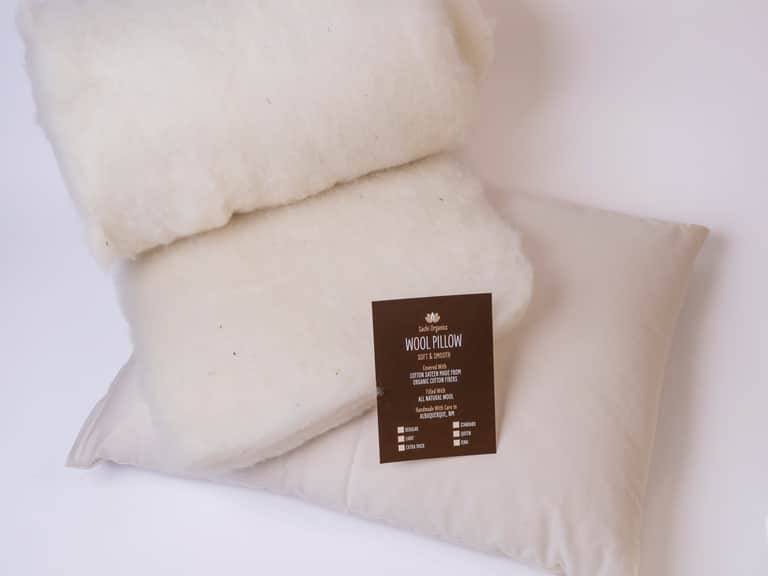
Wool batting is made from fibers formed into a relatively continuous layer. In a pillow, layered batting tends to provide a more uniform, composed feel than loose fill. It can be comfortable for sleepers who want a stable surface without the pronounced shifting associated with some granular or shredded materials. The trade-off is that batting is not always easy to reshape or tailor once enclosed.
Wool clusters, sometimes called wool balls or puffs, are small bundles of fiber that create a softer, more buoyant filling. The spaces between clusters can give the pillow a pliable, airy character. Depending on the design, clusters may be arranged to encourage movement and resilience rather than forming one dense slab. Some pillows use wool clusters in a construction intended to help maintain loft, while others allow the filling to be removed or rearranged.
A third approach pairs wool with a firmer internal element. For example, a natural latex core wrapped in wool offers a different sensation from a pillow made entirely of loose wool fill: the core supplies a more defined foundation, while the wool layer adds a breathable, cushioned surface. This can suit someone seeking a more consistent shape, but it is not interchangeable with an adjustable, all-wool pillow.
There is no universally superior construction. Batting may appeal to those who like an even, settled feel; clusters may suit people who want a softer, more adaptable texture; and a core-based design can provide a firmer structure. Reading the construction details is more revealing than relying on broad terms such as “natural,” “plush,” or “supportive.”
Why adjustability can change the decision
An adjustable wool pillow gives you the option to add or remove fill, allowing you to customize its height and firmness. That flexibility can be useful if you are unsure whether you prefer a higher or lower pillow, if your comfort needs change over time, or if you share a household with someone whose ideal loft is different. Rather than selecting a fixed profile and hoping it suits you, you can make measured adjustments.
The process does take patience. Removing too much fill at once can leave a pillow feeling flat; leaving it overstuffed may create excess height or pressure. A careful approach is to make small changes, close the casing, and test the pillow in your usual sleeping position. Keep removed wool in a clean, dry place if the product’s care instructions allow it to be stored for later use.
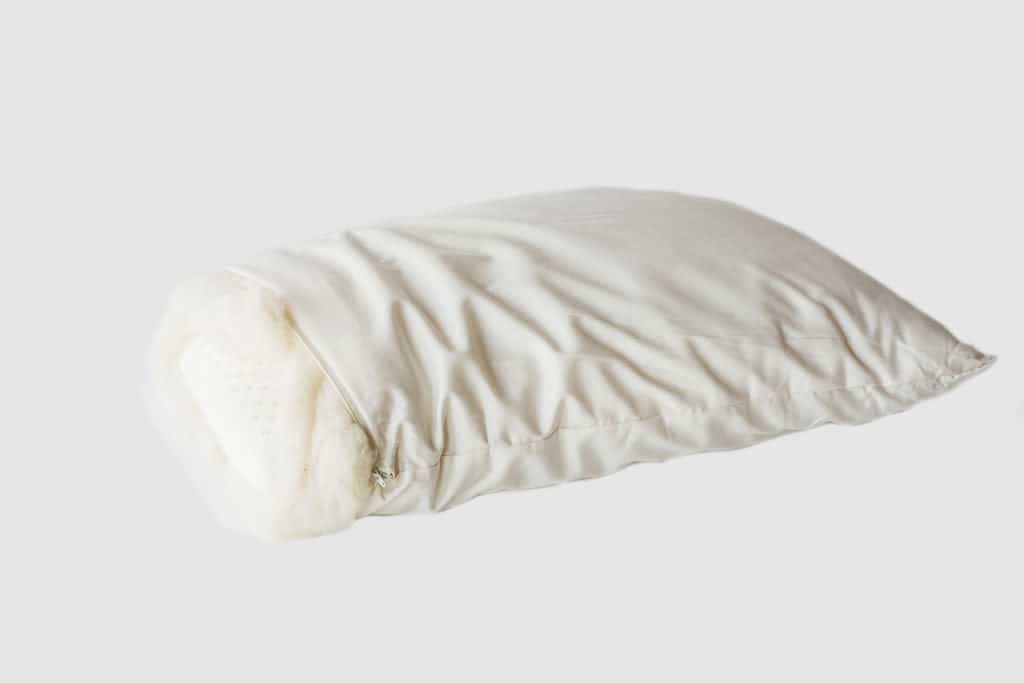
Adjustability does not mean endless customization. The pillow’s casing, amount of original fill, and internal construction place limits on how low, high, soft, or firm it can become. It is also worth checking whether the zipper provides access to the filling itself or only to a washable outer cover. Those are different features, and product descriptions sometimes use “adjustable” broadly.
Among the examples in this category, the Savvy Rest organic wool pillow is described as overfilled, with a zippered casing that lets the user remove wool to personalize the height and feel. The Obasan organic wool pillow likewise has a zippered core and removable wool knops, so fill can be added or taken away. Both examples show why the details of the opening and filling matter: they make it possible to fine-tune the pillow, but they also invite a little hands-on experimentation.
Match pillow height to your sleep position
Side sleeping: The distance from shoulder to head often calls for a fuller pillow, but the right amount depends on shoulder width and mattress softness. If your head seems to tip down toward the mattress, the pillow may be too low or too compressible. If it angles upward, the profile may be too high. An adjustable wool pillow can be useful here because you can test a gradual change rather than commit to a fixed height.
Back sleeping: A moderate loft is a common place to begin. The pillow should feel supportive without forcing the head forward. Batting or a gently resilient cluster fill may offer an even cradle, while removable filling lets you reduce excess height if the pillow feels too full. The aim is comfort and a relaxed resting position, not a rigidly prescribed posture.
Stomach sleeping: Many stomach sleepers prefer less height because a tall pillow can turn the head sharply to one side. A low, soft profile may feel more natural, although some people sleep comfortably with a different setup. Before buying a pillow that cannot be adjusted, consider whether its stated profile is likely to be low enough once your head is resting on it.
Combination sleeping: If you rotate through the night, look for a pillow that responds comfortably in more than one position. A highly structured pillow may hold its shape beautifully but feel less forgiving when you roll onto your side. A more adaptable fill can offer a softer transition, though too much shifting may be inconvenient for some sleepers. Your own experience should guide the choice.
Firmness and support are not the same thing
Firmness describes the impression a pillow gives when compressed; support describes how well it maintains a comfortable position for your head and neck. A pillow can feel soft on first contact and still provide a stable base, or it can feel dense without matching your preferred height. These qualities are related, but they are not identical.
Wool fibers have natural resilience, yet the way they are processed and assembled changes how that resilience feels. Batting, loose clusters, and compacted fill do not respond in precisely the same way. Nor does a natural fiber automatically guarantee a particular degree of support. Look for specific information about fill form, loft, and whether the filling can be adjusted, rather than assuming that all wool pillows share one feel.
If you are changing from a feather, down, synthetic, or foam pillow, give yourself time to notice the difference. Wool may feel less fluid than down, less uniform than some foam designs, or more responsive than a pillow that has lost its spring. A new sensation is not necessarily a poor fit, but persistent discomfort is a reason to reconsider the height and construction.
Cover, casing, and everyday comfort
The fabric surrounding the fill contributes to the pillow’s hand and breathability. Cotton is common in wool pillows, including sateen and percale versions. A smooth sateen cover may feel soft against the face, while a more textured weave can have a crisper touch. The pillowcase you use adds another layer, so think about the complete surface rather than the fill alone.
A zippered casing has practical value beyond adjustment. It may make the fill accessible, help you inspect the construction, or allow the outer cover to be removed—depending on the design. Before washing anything, confirm which parts are washable. A washable cover does not necessarily mean the wool inside can go in the machine, and a pillow with removable fill does not automatically have a washable core.
For instance, the Natural Wool Pillow – Soft and Supportive combines resilient wool batting with an organic cotton sateen cover and a zipper that allows loft adjustment. That combination is useful to consider if you want a traditional wool-fill feel but would like control over the pillow’s height. Check the manufacturer’s current care directions before cleaning or modifying any pillow.
Care is part of the comfort calculation
Wool pillows often reward simple, careful maintenance. A pillow protector and regular pillowcase can help limit direct contact with sweat, oils, and everyday dust. Airing the pillow periodically may refresh it, while spot cleaning can be preferable to washing the entire fill. Always follow the specific instructions provided for the product: different wool treatments, casings, and constructions call for different methods.
Some wool fillings are not washable, even when the cover can be cleaned separately. Agitation, excess heat, or unsuitable detergent can cause wool fibers to mat or shrink. If the pillow has removable filling, do not assume that the fill should be washed or that it is safe to tumble dry. A cautious reading of the label can protect both the pillow’s loft and its useful life.
Adjustable pillows also need a tidy method for handling spare fill. Work on a clean surface, keep the zipper fully closed while testing, and avoid overfilling the casing. If the wool is difficult to redistribute or the pillow’s shape changes unevenly, pause and consult the care guide instead of forcing the material into place.
Questions to ask before choosing
- What is the fill? Is it wool batting, wool clusters, loose wool, or a wool layer around a separate core?
- Can the loft be changed? Check whether filling can be removed or added, and how accessible it is.
- How does the pillow feel when compressed? A listed height may not describe how much it settles under your head.
- Does the profile suit your usual position? Start with sleep position, then account for your body and mattress.
- What parts are washable? Confirm whether the cover, fill, or neither is intended for laundering.
- What is the return or trial policy? Pillow comfort is personal, and an at-home test can be valuable.
A considered choice, not a universal winner
The best wool pillow is not automatically the softest, the fullest, or the one with the most elaborate construction. It is the pillow whose height and response feel right in the position you actually sleep in, with a care routine you are comfortable maintaining. A fixed-fill design may be perfectly satisfying if its profile already suits you; an adjustable one may be worth seeking out if you want room to refine the fit.
When comparing Savvy Rest, Obasan, and other wool pillows, focus on what happens inside the casing: the form of the wool, how much fill is supplied, whether it can be removed or returned, and how the maker recommends caring for it. Then consider the tactile details—the cover fabric, the initial feel, and the way the pillow settles beneath you. This is the quieter, more discerning route to better pillow support: fewer assumptions, closer attention, and a choice shaped around your own comfort.
Product materials and care details can vary by model and may change. Review the current product information and care label before purchase or cleaning.